24 Aug 2026
FileBackend in Production: C++ Log Rotation with logme

Writing log messages to a file is easy. Keeping file logging predictable after months of production use is much harder. An active log file must not grow forever. Old logs need to be preserved for a useful period, but they also need to be deleted eventually. Finished files may need compression. At the same time,
19 Aug 2026
Thread-Local Logging Context in C++: Using Thread-Local Context in logme

A useful log should do more than tell you what happened. It should also make it clear which request, connection, client, or background job a message belongs to. When an application is still small, this usually seems easy enough. You can just include the extra data directly in the log call: LogmeI( "Request %s: loading
27 Jul 2026
Log Source Profiling: Which Log Statement Is Responsible?
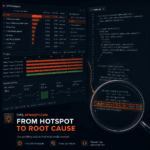
How log source profiling traces CPU and file I/O back to individual C and C++ call sites without disabling production diagnostics Log source profiling starts where a normal CPU profiler stops. A system profiler can tell you that a logging thread is consuming CPU and show write(), a file-backend worker, queue synchronization, memory copies, and
13 Jul 2026
Migrating from spdlog to logme: From Loggers and Sinks to Channels and Backends

Migrating from spdlog to logme should not be a mechanical replacement of function names. On the surface, both libraries perform similar work: an application calls a logging API, the message gets a severity level, is formatted, and is sent to a file, console, or another output. However, there is little reason to migrate just to